- +90 212 640 55 86
- Mon - Fri: 09:00 - 18:00
- info@ebiexport.com

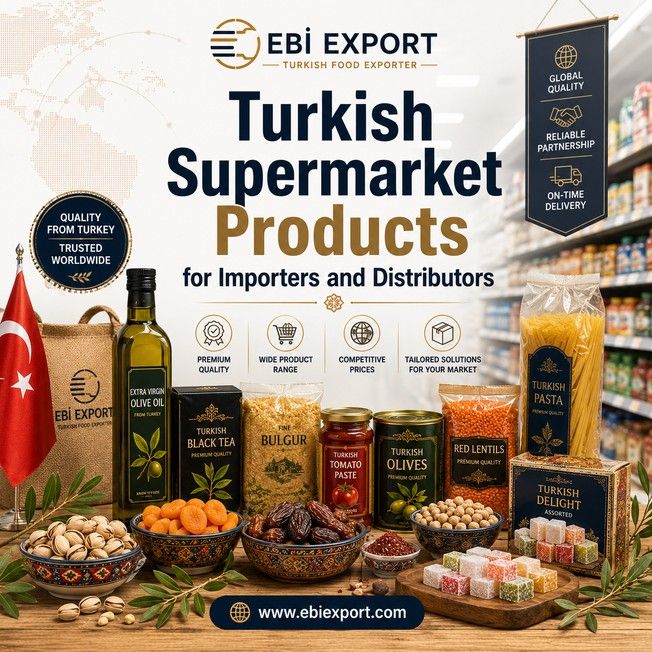
The demand for Turkish supermarket products is growing in many global markets. Importers and distributors are looking for products that can fill retail shelves, support ethnic grocery sections, serve food service buyers, and create repeat sales through trusted food categories from Turkiye.Turkiye has a strong food production culture and a wide supermarket product range. From Turkish olives and kadayif to sauces, pickles, legumes, spices, confectionery products, bakery ingredients, breakfast items, canned foods, dry goods, and pantry products, Turkish food categories can serve many different markets.
For international buyers, the opportunity is clear. Turkish supermarket products offer variety, tradition, competitive supply options, and strong commercial flexibility. But successful importing is not only about choosing attractive products. It is about sourcing them from the right supplier, in the right packaging, with the right documentation, and with a supply process that can continue without surprises.In supermarket supply, a single shipment may open the door. Consistency keeps the door open.
Why Turkish Supermarket Products Attract Global Buyers
Turkish food products have strong appeal because they combine familiar tastes with regional identity. Many products from Turkiye are already recognized in Mediterranean, Middle Eastern, Balkan, European, and ethnic food markets. This makes them suitable for supermarkets, grocery chains, wholesalers, distributors, and specialty food stores.A supermarket buyer usually thinks differently from a restaurant or bulk food buyer. Retail shelves need products that are visually clean, properly labeled, easy to understand, and suitable for repeat consumer purchase. The product must not only taste good; it must also look trustworthy on the shelf.
This is where Turkish supermarket products can create value. Many Turkish food categories are suitable for retail packaging and can be positioned in different segments. Some products can be sold as traditional ethnic foods. Some can be positioned as Mediterranean grocery items. Some can serve premium, natural, or specialty food sections.A jar of olives, a pack of kadayif, a bottle of sauce, or a bag of legumes may seem simple. But in retail, simple products often build the strongest repeat business when quality and packaging are stable.
Important Turkish Supermarket Product Categories
Importers and distributors should select supermarket products according to their local market demand, customer habits, price level, and distribution channel. Not every product is suitable for every country. The right product in the wrong market can sit quietly on the shelf like a guest who came to the wrong wedding.Turkish olives are among the strongest supermarket products from Turkiye. They can be supplied in glass jars, tins, vacuum packs, plastic containers, buckets, or bulk formats depending on the buyer’s channel. For supermarkets, olives need clear labeling, strong packaging, stable taste, and visually appealing presentation.
Turkish kadayif is a valuable product for markets where Turkish, Middle Eastern, Mediterranean, and Balkan desserts are known. It can be supplied for retail shelves, bakeries, restaurants, dessert producers, and wholesale distributors. Freshness, texture, storage condition, and packaging size are important details for this product group.Legumes and pulses are practical supermarket items because they are shelf-stable, widely consumed, and suitable for many cuisines. Lentils, chickpeas, beans, bulgur-style products, and similar dry foods can create steady demand in both ethnic and general grocery markets.
Pickles and preserved vegetables are another strong category. Turkish pickles can appeal to ethnic food buyers, Mediterranean product sections, restaurants, and supermarket customers looking for bold traditional flavors.Sauces, pastes, and pantry products can include tomato paste, pepper paste, tahini, molasses, vinegar products, cooking sauces, and regional pantry items. These products often support repeat purchases because they are used regularly in home cooking.
Spices and seasoning products are useful for importers because they are compact, shelf-stable, and suitable for retail display. However, aroma protection, packaging quality, and label clarity are critical.Confectionery and dessert ingredients can also create strong supermarket value. Turkish sweets, bakery ingredients, dessert bases, and traditional products can serve both retail buyers and food service customers.
What Importers Need from a Turkish Supermarket Supplier
A reliable Turkish supermarket supplier should understand that importers and distributors need more than a catalog. They need product clarity, export discipline, and commercial honesty.The buyer should be able to receive clear answers about product specifications, shelf life, ingredients, packaging options, minimum order quantities, private label possibilities, carton dimensions, pallet structure, lead times, and export documentation.
If a supplier cannot explain these details, the buyer should be careful. In food export, uncertainty is not a small shadow. It is usually the beginning of a bigger problem.Importers and distributors generally need support in these areas:
Product selection
A supplier should help buyers choose supermarket products that match the target market. Some countries may prefer premium retail packs, while others focus on value products, family-size packaging, or ethnic grocery formats.
Export-ready packaging
Products must be packed for international transport and retail presentation. Packaging must protect the product, support shelf life, and meet the expectations of the buyer’s market.
Documentation support
Food import requires correct documents. Commercial invoice, packing list, certificate of origin, product specifications, shelf life details, and other product-related documents should be prepared carefully.
Consistent supply
Supermarket and distributor channels depend on repeat orders. One good shipment is not enough. Buyers need confidence that quality, packaging, and availability will remain stable.Late answers and vague promises create risk. A professional supplier should communicate clearly before, during, and after the order.
Retail Packaging for Supermarket Products
Retail packaging is one of the most important parts of supermarket supply. It affects shelf performance, consumer trust, product protection, and legal compliance.For supermarket products, packaging should be clean, strong, informative, and suitable for the buyer’s sales channel. A product may be excellent, but if the label is weak or the packaging looks outdated, customers may not give it a chance.
Importers should check label language, barcode requirements, ingredient declaration, nutritional information, production date, expiry date, storage instructions, packaging size, and carton details before placing an order.For products like Turkish olives, packaging must protect taste, brine quality, and visual presentation. For Turkish kadayif, packaging should protect texture and freshness. For dry goods, packaging must prevent moisture problems and maintain shelf stability.
In supermarket supply, the package is the first handshake with the customer. If that handshake is weak, the product starts the conversation from behind.
Private Label Turkish Supermarket Products
Many importers and distributors prefer private label Turkish supermarket products because they want to build their own brand in local markets. Private label can be especially valuable for supermarket chains, ethnic grocery distributors, gourmet food stores, and import companies with established sales networks.Private label supply from Turkiye may include olives, pickles, sauces, legumes, spices, dry foods, dessert ingredients, sweets, and pantry products. However, private label work requires careful planning.
The buyer must prepare or approve label design, product name, barcode structure, ingredient information, nutritional details, target market language, packaging size, carton structure, and order quantity. The supplier must confirm production timeline, minimum order quantity, and packaging availability.Private label is not just putting a logo on a product. It is building a retail promise. If the product fails, the buyer’s brand takes the hit. That is why private label sourcing should be handled with patience and discipline.
Supermarket Supply for Distributors
Distributors need products that can move through different sales channels. A distributor may supply supermarkets, small grocery stores, restaurants, hotels, ethnic markets, online stores, and wholesalers at the same time.This means product selection must be balanced. Some products should be retail-friendly. Some should serve food service. Some should support volume sales. A good Turkish food supplier should understand these different needs and help create a practical product mix.
Mixed product shipments can also be useful for distributors who want to test several Turkish supermarket categories in their market. Instead of focusing on one product only, buyers may start with a balanced range of olives, dry foods, sauces, pickles, and dessert ingredients.However, mixed shipments require good planning. Carton structure, pallet layout, product shelf life, storage needs, and documentation must be organized carefully. Otherwise, the shipment becomes a puzzle with missing pieces.
Quality Control in Turkish Supermarket Product Export
Quality control is essential for Turkish supermarket products. Buyers should review product samples, technical specifications, packaging details, shelf life information, and shipment conditions before ordering.For olives, quality control may include size, variety, salt level, texture, color, packaging type, and taste profile. For kadayif, quality may include freshness, texture, strand structure, storage condition, and usability for desserts. For dry foods, moisture level, cleanliness, packaging seal, and shelf stability become more important.
Supermarket products must also be consistent. A customer who buys the same product twice expects the same experience. If quality changes too much between shipments, the retail channel loses trust.Importers should ask direct questions. What is the shelf life? What is the minimum order quantity? Can the label be adapted? How is the product stored? What documents can be provided? Can the same packaging be supplied again? These questions may look simple, but they protect the buyer from expensive mistakes.
Documentation and Export Preparation
Food products cannot travel internationally with only good intentions. They need accurate documentation and proper export preparation.The exact documents depend on the product and destination country, but importers may commonly need commercial invoice, packing list, certificate of origin, product specifications, shelf life declaration, ingredient information, and other food-related documents requested by local authorities.
A professional Turkish food exporter should explain which documents can be prepared and which requirements must be confirmed by the importer. Buyers should also check with their customs broker before finalizing the shipment.Documentation should be discussed early. Leaving paperwork until the end is like checking the brakes after the truck starts moving. It may still work, but nobody serious should build a business that way.
Building a Long-Term Turkish Supermarket Supply Line
Importers and distributors usually look for more than a one-time purchase. They want a supply line that can grow with their market. This requires reliable products, stable packaging, clear communication, and repeatable export performance.Ebi Export works with international buyers looking for Turkish supermarket products from Turkiye. The focus is on practical sourcing, wholesale supply, export-ready preparation, and product solutions suitable for importers and distributors.
For buyers interested in Turkish olives, Turkish kadayif, and other supermarket food categories, working with a structured supplier can make the process more predictable. The goal is not only to source products from Turkiye, but to build a supply process that supports long-term retail and distribution growth.Turkish supermarket products have strong potential in global markets because they offer variety, tradition, and commercial flexibility. With the right sourcing approach, these products can reach supermarket shelves, ethnic grocery stores, wholesale warehouses, restaurant suppliers, and distributor networks with stronger value.
Good products open the conversation. Reliable supply keeps it alive. Ebi Export helps international importers and distributors source Turkish supermarket products with a clearer process shaped around product quality, packaging, documentation, and long-term cooperation.