- +90 212 640 55 86
- Mon - Fri: 09:00 - 18:00
- info@ebiexport.com

Sauces exports from Turkey refer to the international supply of sauce products manufactured in Türkiye and distributed to global markets, with the United States standing out as a strategic destination. In the U.S., sauces are not niche items. They are daily-use products across households, food service operations, and industrial food manufacturing.
American consumers value variety, consistency, and clear labeling. For this reason, sauces exports from Turkey are increasingly positioned as a reliable alternative to traditional suppliers. Turkish sauce producers combine regional culinary knowledge with scalable production systems designed for export compliance.
This balance allows Turkish sauces to meet U.S. expectations without losing their distinctive character.
Why the United States Is a Key Destination for Sauces Exports from Turkey
The U.S. sauce market is one of the largest and most diversified in the world. From ethnic cuisines to mainstream food brands, sauces play a central role in American consumption habits. Sauces exports from Turkey fit naturally into this ecosystem due to product diversity and flexible manufacturing.
U.S. buyers look for suppliers capable of handling private label production, food service formats, and retail-ready packaging. Turkish exporters have adapted to these demands by developing export-oriented product lines.
In addition, Türkiye’s experience in supplying Europe has strengthened its regulatory discipline, which translates well into U.S. compliance requirements.
Types of Products Included in Sauces Exports from Turkey
Sauces exports from Turkey cover a wide product range. These include tomato-based sauces, pepper sauces, yogurt-based sauces, fermented sauces, and regional specialty products adapted for international consumption.
For the U.S. market, mild to medium flavor profiles are commonly preferred, although demand for authentic and bold tastes is also growing. Turkish exporters respond to this by adjusting formulations without compromising product identity.
The ability to customize texture, acidity, and spice levels makes Turkish sauces suitable for multiple U.S. segments.
Export-grade sauces require controlled processing from raw material selection to final packaging. Sauces exports from Turkey are produced in facilities designed to meet international food safety standards.
Ingredients are sourced with traceability in mind. Cooking and blending processes are monitored to ensure uniform flavor and viscosity. Thermal processing parameters are optimized to secure shelf stability without degrading taste.
These technical controls are essential for meeting the expectations of U.S. distributors and retailers.
The U.S. market places strong emphasis on ingredient transparency. Artificial additives, excessive preservatives, and unclear labeling can limit market access. Sauces exports from Turkey increasingly align with clean label trends.
Formulations are developed to minimize unnecessary additives while maintaining shelf life. Ingredient lists are simplified and adapted to U.S. labeling norms. This approach enhances consumer trust and brand acceptance.
For American buyers, this alignment significantly reduces regulatory and reputational risk.
Packaging plays a decisive role in sauces exports from Turkey to the United States. Retail packaging must be durable, visually appealing, and compliant with U.S. labeling requirements. Food service formats prioritize functionality and portion control.
Turkish exporters offer flexible packaging options, including glass jars, plastic bottles, pouches, and bulk containers. Each format is designed to protect product quality during long-distance transport.
Packaging customization is often a determining factor in successful U.S. market entry.
Entering the U.S. market requires strict regulatory alignment. Sauces exports from Turkey comply with FDA regulations, including facility registration, product safety standards, and labeling requirements.
Export documentation includes ingredient specifications, nutritional information, and shelf-life data. Products are prepared with U.S. import inspections in mind, minimizing clearance delays.
This compliance-focused approach allows Turkish exporters to build long-term relationships with U.S. partners.
Consistency is non-negotiable in the U.S. food market. Buyers expect the same taste, texture, and appearance across every shipment. Sauces exports from Turkey address this expectation through batch-based quality control systems.
Each production run is tested for flavor balance, viscosity, and microbial safety. Deviations are corrected before shipment approval. This discipline ensures predictable performance across retail and food service applications.
Such reliability strengthens supplier credibility in the U.S. market.
Competition in the U.S. sauce market is intense. Sauces exports from Turkey compete by offering a combination of quality, flexibility, and cost efficiency. Turkish producers are able to scale production while maintaining control over formulation.
This capability supports both branded products and private label programs. Buyers benefit from shorter development cycles and adaptable production volumes.
As a result, Turkish sauces are increasingly positioned as strategic sourcing options rather than secondary alternatives.
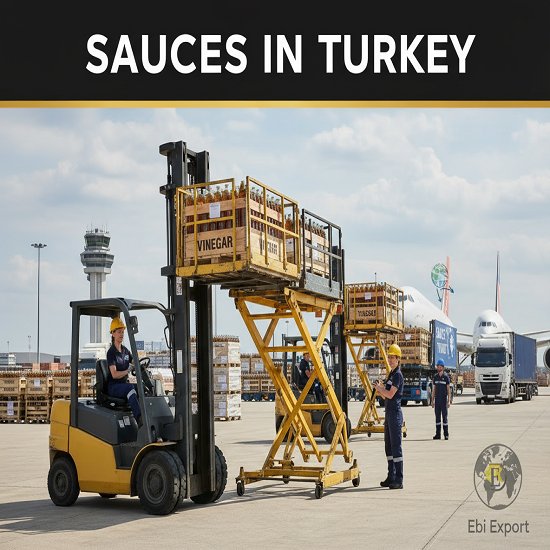
Long-distance logistics require careful planning. Sauces exports from Turkey are managed with attention to transit time, temperature stability, and packaging integrity.
Container loading plans are designed to prevent leakage or deformation. Export schedules are coordinated to align with U.S. distribution timelines. These logistical details directly impact product quality upon arrival.
Efficient logistics enhance competitiveness in the U.S. market.
We approach sauces exports from Turkey with a focus on export performance rather than domestic standards. Every stage of production is evaluated against U.S. market expectations.
Formulations are tested for stability, labeling is reviewed for compliance, and packaging is selected for long-haul transport. Products that do not meet export criteria are excluded from shipment.
We do not simply export sauces. We deliver sauces exports from Turkey at the highest professional standard.
U.S. consumers are increasingly interested in international flavors, functional ingredients, and versatile products. Sauces exports from Turkey are well-positioned to benefit from these trends.
Demand for Mediterranean, Middle Eastern, and fusion flavors continues to grow. Turkish sauces align naturally with this demand while offering authenticity and adaptability.
As private label programs expand, Turkish exporters gain additional opportunities to scale their presence.
The long-term outlook for sauces exports from Turkey in the U.S. remains strong. Market demand continues to diversify, creating space for new suppliers who can meet regulatory and commercial expectations.
Investments in traceability, sustainability, and product innovation further strengthen Turkish exporters’ competitiveness. U.S. buyers increasingly value suppliers who demonstrate control and transparency.
These factors position Turkish sauce exporters for sustainable growth.
What types of products are included in sauces exports from Turkey?
Sauces exports from Turkey include tomato-based, pepper-based, fermented, yogurt-based, and specialty sauces adapted for international markets.
Are sauces exports from Turkey compliant with U.S. regulations?
Yes. Products are prepared in compliance with FDA requirements and U.S. labeling standards.
Can sauces exports from Turkey be customized for the U.S. market?
Yes. Flavor profiles, packaging formats, and formulations can be adjusted to meet U.S. buyer expectations.
Which U.S. segments use sauces exports from Turkey?
Retail, food service, and private label manufacturing segments commonly use these products.
Why choose sauces exports from Turkey for the U.S. market?
They offer consistent quality, regulatory compliance, flexible production, and competitive sourcing advantages.